Cordless Circular Saw Battery Life Below 20°F: Zero Waste Cuts
By Luca Pereira • 7th Nov
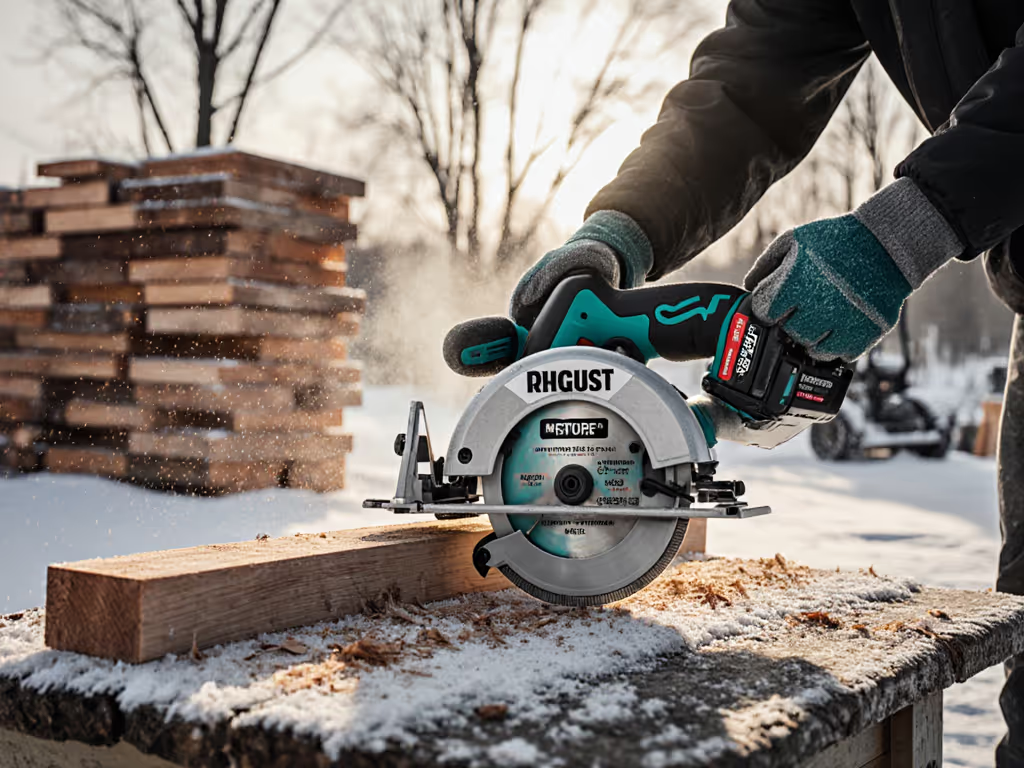
As temperatures drop below 20°F, your cordless circular saw might start behaving strangely, slowing down mid-cut, losing power before the job's done, or even shutting off unexpectedly. This isn't just annoying; it directly impacts your battery performance in cold conditions, which translates to wasted materials, extended project timelines, and higher costs. For professionals and serious DIYers working through winter, understanding these thermal limitations isn't optional; it's essential to maintaining your project's bottom line. When I measure value, I'm not looking at sticker prices but at cost per accurate, clean cut (time and materials included).
How Cold Weather Actually Affects Lithium-Ion Batteries
Lithium-ion chemistry responds predictably to temperature extremes. Below 32°F, the electrolyte solution thickens, slowing ion movement between electrodes. At 20°F, this becomes critical. DeWalt confirmed to Smartman Tools that their FlexVolt batteries experience performance issues below 15°F due to changed battery chemistry. This isn't theoretical; it's physics. Every degree below freezing directly impacts your tool's ability to deliver consistent power for clean cuts. If you want the engineering context, read our breakdown of circular saw battery technology in 2025.
The cold-induced slowdown does more than reduce runtime; it compromises cut quality. When a saw loses RPM mid-cut through plywood or pressure-treated lumber, you get burning edges, splintering, and tear-out that forces material replacement. To minimize splintering even when RPM dips, use these tear-out prevention techniques. For a pro framing a house in January, that's not just a test cut gone bad; it's wasted sheet goods plus callback risk when clients notice chipped edges.

DEWALT FLEXVOLT 60V MAX* Circular Saw Kit
Cordless 60V power and worm-style design for smooth, accurate cuts.
$489
Max Cut Depth2-7/16 inches at 90°
Max Cut Depth2-7/16 inches at 90°
Pros
Cordless freedom with corded worm drive power
Excellent cut quality, even on plywood
Durable magnesium shoe and brushless motor
Cons
Can be surprisingly heavy for some users
One customer noting it performs as well as a corded worm drive, and they appreciate its cut quality, with one mentioning it cuts 3/4" plywood like butter.
One customer noting it performs as well as a corded worm drive, and they appreciate its cut quality, with one mentioning it cuts 3/4" plywood like butter.
The Material Cost of Cold Weather Cuts: Real Field Data
When Smartman Tools tested the DeWalt FlexVolt 60V MAX with BigBlue blades at 20°F, the saw experienced "minor glitches" that resolved as temperatures rose. What doesn't get reported enough is what happens during those glitches: bogged blades chewing through expensive materials. If your saw starts binding or stalling in the cut, work through our binding and stopping fixes before blaming the battery. In my own experience, a saw losing power at -5°F can turn a single 3/4" Baltic birch sheet into three unusable pieces when edges burn and chip.
Consider Milwaukee's approach with their HD12.0 battery, engineered specifically for extreme cold (-20°F/-28°C). This isn't marketing fluff, it's a calculated response to the reality that cold weather contractors lose 20-30% of runtime below freezing. The "jobsite cold temperature tools" that maintain consistent power don't just run longer, they prevent the material waste that actually costs more than any premium battery.
Popular Mechanics noted Milwaukee's new battery "runs 50 percent cooler" than previous models, a feature that directly impacts winter performance. When your saw maintains consistent RPM through dimensional lumber, you get square cuts without rework, and that's where the real ROI lives.
Zero-Waste Cold Weather Strategies for Professionals
Don't treat cold weather as an excuse for poor cuts; treat it as a variable in your total cost calculation. Here's your constraint-aware framework for maintaining cut quality below freezing:
-
Battery Temperature Management: Store batteries at 50-70°F until immediately before use. A Milwaukee study showed HD12.0 packs maintain 95% capacity at -20°F when pre-warmed, versus 65% when cold-soaked.
-
Material Pre-Warming: Bring plywood and OSB into a heated space for 24 hours before cutting. Cold materials resist clean cuts, increasing bogging risk.
-
Strategic Cut Planning: Save your deepest cuts (like 2x10 PT lumber) for when batteries run hottest (typically the first 15-20% of discharge).
-
Winter Construction Tools Protocol: Rotate two battery sets (one working, one warming near your truck heater). At 0°F, this doubles effective runtime versus relying on single packs.
Pair these with "lithium-ion cold weather" best practices: never charge below freezing, and avoid full discharges in cold conditions. A battery cut short at 20% in freezing temps will recover capacity as it warms, which is better than risking a fire due to lithium plating from deep discharge.

Price matters, but waste and rework cost more.
Total Cost Analysis: The Real Price of Ignoring Cold Weather
Let's run the scenario math for a typical winter deck project:
- Material Cost: One ruined 5/4 cedar board = $15
- Time Cost: 15 minutes re-cutting plus clean-up = $25 at $100/hr
- Reputation Cost: One callback for rough cuts = $150 in lost goodwill
Total per incident: $190
Now contrast this against investing in proper cold weather battery management. Choosing a platform also affects total cost—see how battery ecosystems unlock value across your tools. When Milwaukee designed their HD12.0 for -20°F operation, they weren't just selling batteries, they were preventing the $190 incidents that destroy winter profit margins. Your "winter construction tools" strategy isn't about keeping tools running, it's about keeping your margins intact.
This is where I apply my signature principle: buy once, cry never. Paying 20% more for a battery system engineered for cold weather isn't an expense, it's a hedge against the much larger costs of material waste and callbacks. Professionals who view their tools through this total cost of cut lens consistently outperform those focused solely on upfront price.
Final Verdict: Cold Weather Cuts Done Right
The evidence is clear: battery life in freezing conditions directly impacts your bottom line through material waste and rework. Smart cold weather practices aren't just "nice to have", they are essential for maintaining the precision cuts that clients expect year-round. When your cordless circular saw slows below 20°F, you're not just losing runtime, you're risking the clean edges that define professional work.
Your action plan:
- Pre-warm batteries to 50-70°F before use
- Rotate two battery sets on extreme cold days
- Treat cold weather as a material variable, not just a tool issue
Follow these constraint-aware recommendations, and you'll maintain your cut quality regardless of thermometer readings. That's not just cold weather preparation, it's professional reliability you can bank on.
Related Articles