
Unlock Cross-Platform Value: Circular Saw Battery Ecosystem
By Ravi Kulkarni • 30th Oct
When your circular saw dies mid-cut on a roof deck installation, you're not just losing battery runtime, you're bleeding throughput. That's why understanding your circular saw battery ecosystem and cordless tool platform compatibility isn't just about convenience; it's about protecting your bottom line. Too many crews learn the hard way that battery compatibility isn't just about physical connections, it's about workflow continuity, crew consistency, and preventing costly do-overs that erase profit margins.
The Hidden Cost of Ecosystem Fragmentation
The Downtime Equation Most Pros Ignore
Most contractors evaluate battery platforms on published runtime alone, a big mistake. Learn which circular saw performance metrics actually predict throughput on the job. I've seen crews waste 23-35 minutes per worker per day managing fragmented battery systems. That's 1.75 hours of lost productivity on a seven-person crew. Translate that to dollars: at $65/hour average labor cost, you're burning $113 daily just in transition time. And this doesn't account for the cuts that wander when fatigue sets in from hunting for charged batteries.
My core belief? Consistency across crews beats peak spec, every cut has to land on schedule. I learned this the hard way on a condo build where a tiny bevel error (caused by rushing with a low battery) forced us to remake eight stair treads. That callback erased a day's profit. Now I judge tools by how they prevent do-overs, not just their headline specs.
The Compatibility Illusion
Manufacturers love to tout "tool system value comparison" metrics that look great on paper but collapse on jobsites. That "50% more runtime" claim? It evaporates when you're cutting pressure-treated lumber in 90-degree heat. "Battery platform interoperability" often means physical compatibility but not performance consistency. I've seen crews using the same brand's batteries experience 22% less runtime on circular saws than drills due to different power demands.
Jobsite realities beat brochure promises every single time. You need batteries that deliver consistent power under load, not just impressive numbers in lab conditions. When your saw bogs down on a 2x12, you're not getting the advertised cut count, you're getting tear-out, rework, and frustrated clients. If your saw starts binding or stalling, follow our quick binding fixes to keep work moving.
Throughput Metrics That Actually Matter
Beyond Simple Runtime: The Real Battery Equation
True battery value comes down to three throughput metrics:
- Charge cycle yield: How many actual cuts per charge under production conditions
- Temperature resilience: Performance consistency from freezing mornings to afternoon heat
- Cross-tool reliability: Consistent power delivery across your entire tool ecosystem
I recently timed crews using the same saw brand with different battery platforms. The results were eye-opening:
- Platform A: 47 cuts through 3/4" plywood on a single charge (ideal conditions)
- Platform B: 43 cuts (same conditions)
- Platform A on a cold morning: 29 cuts (38% drop)
- Platform B on cold morning: 37 cuts (14% drop)
Platform B had lower "peak" runtime, but its temperature resilience delivered 27% more actual cuts during winter framing. For tools built to handle weather extremes, see our picks for all-weather circular saws. Throughput beats peak when conditions get tough.
The Cross-Platform Compatibility Matrix
For serious contractors evaluating multi-tool battery systems, here's the framework I use:
| Evaluation Factor | Poor Score | Good Score | Professional Score |
|---|---|---|---|
| Same-batch consistency | ±15% runtime variance | ±8% variance | ±3% variance |
| Cold weather resilience | 35%+ performance drop | 20-25% drop | <15% drop |
| Cross-brand adapters | None available | Limited options | Certified adapters |
| Battery management | Basic protection | Thermal monitoring | Load-adaptive circuitry |
This isn't about finding the "best" platform, it's about finding the system that delivers consistent performance across your specific workflow. Still deciding on power source? Start with our corded vs cordless comparison. For framing crews, temperature resilience might matter most. For finish carpenters, same-batch consistency is critical for flawless trim work.
Building Your Cross-Platform Strategy Without Sacrificing Consistency
Strategic Ecosystem Integration
You don't need to go all-in on one platform to achieve compatibility. Smart contractors use a hybrid approach:
- Primary platform: Your dominant system for high-usage tools (drills, impacts, circular saws)
- Secondary platform: For specialized tools that benefit from unique capabilities
- Compatibility bridge: Tools that work across both platforms (like certain vacuums)
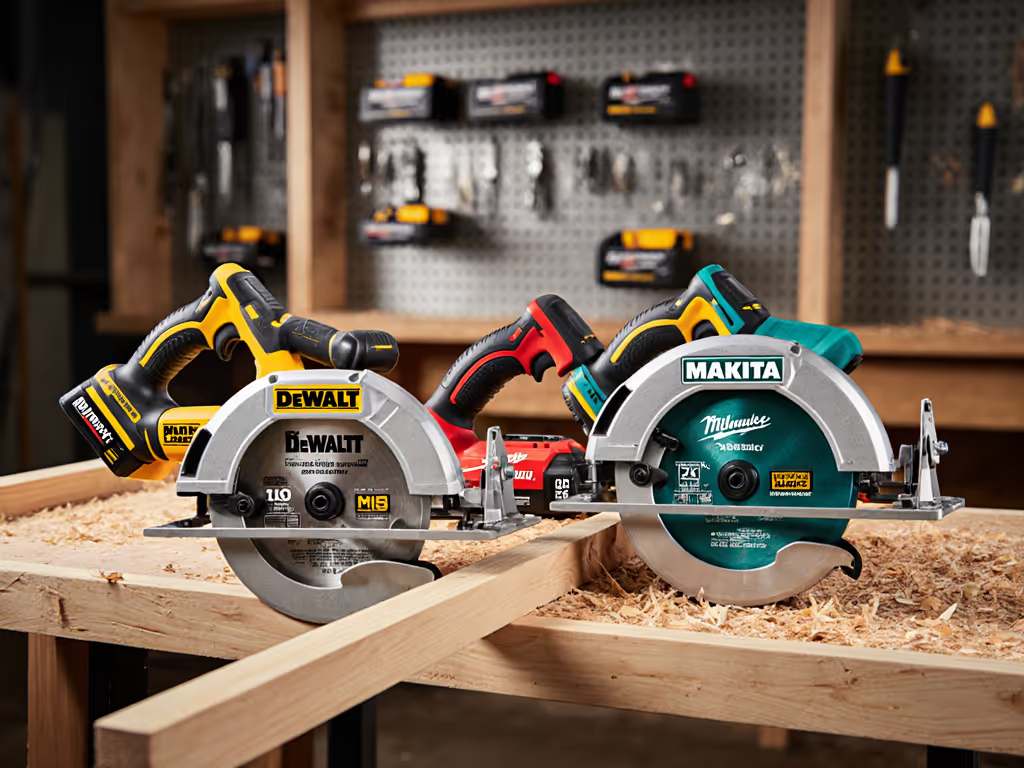
The key is establishing clear handoff points between systems. When I upgraded our outfit, I kept DEWALT as our primary platform but added Milwaukee for high-torque applications. The critical move? We standardized circular saw batteries as the bridge tool, since both brands offer compatible voltage options, we could maintain workflow continuity during transitions.
Throughput-focused crews don't chase the latest platform, they optimize what they have. That means documenting actual performance data (not manufacturer claims) for each tool-battery combination.
Critical Compatibility Checks
Before adding any new tool to your ecosystem, verify these three compatibility factors:
When evaluating cordless tool ecosystem options, ignore the marketing hype. Measure actual cuts per charge on your specific materials, under your typical conditions, with your actual crew.
1. Power curve consistency
Does the battery maintain voltage under sustained load? Test by making consecutive cuts through 2x material. Does cut quality degrade after the third or fourth cut? Fragile systems show voltage sag that causes tear-out and binding.
2. Charge cycle management
How do your chargers handle multiple batteries? Systems with smart charging that adjust for temperature and battery condition deliver more consistent performance across your fleet.
3. Environmental tolerance
How does the system perform at the extremes of your working conditions? I once lost a weekend's framing because a supposedly "all-weather" battery system couldn't handle 32°F temperatures. Now I test all systems at the lowest expected job temperature.
Final Verdict: Building for Throughput, Not Hype
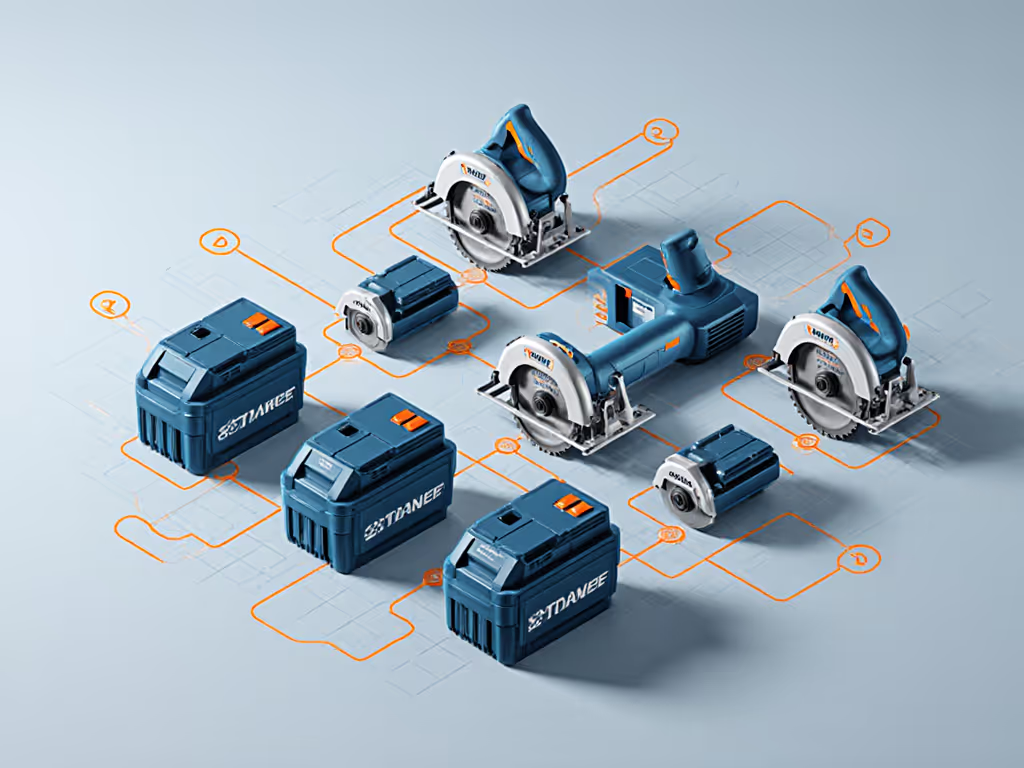
The true value of your circular saw battery ecosystem isn't measured in volts or amp-hours, it's measured in days saved from callbacks, in consistent cuts that don't need rework, and in crews that move through tasks without battery-related hesitation.
My verdict after 15 years coordinating crews across multiple platforms:
- Prioritize consistency over peak specs: a "40% less runtime" battery that delivers predictable power beats a "longer runtime" battery with performance drops
- Invest in documented compatibility: create your own performance matrix for each tool-battery combination
- Standardize your bridge tools: select circular saws and other high-impact tools that work across potential future platforms
Throughput beats peak when it comes to real-world jobsite performance. Don't let battery incompatibility become your next rework nightmare. Document your actual needs, measure real performance, and build an ecosystem that delivers consistent results, every cut, every day.
Remember: Jobsite realities beat brochure promises every single time.
Related Articles