
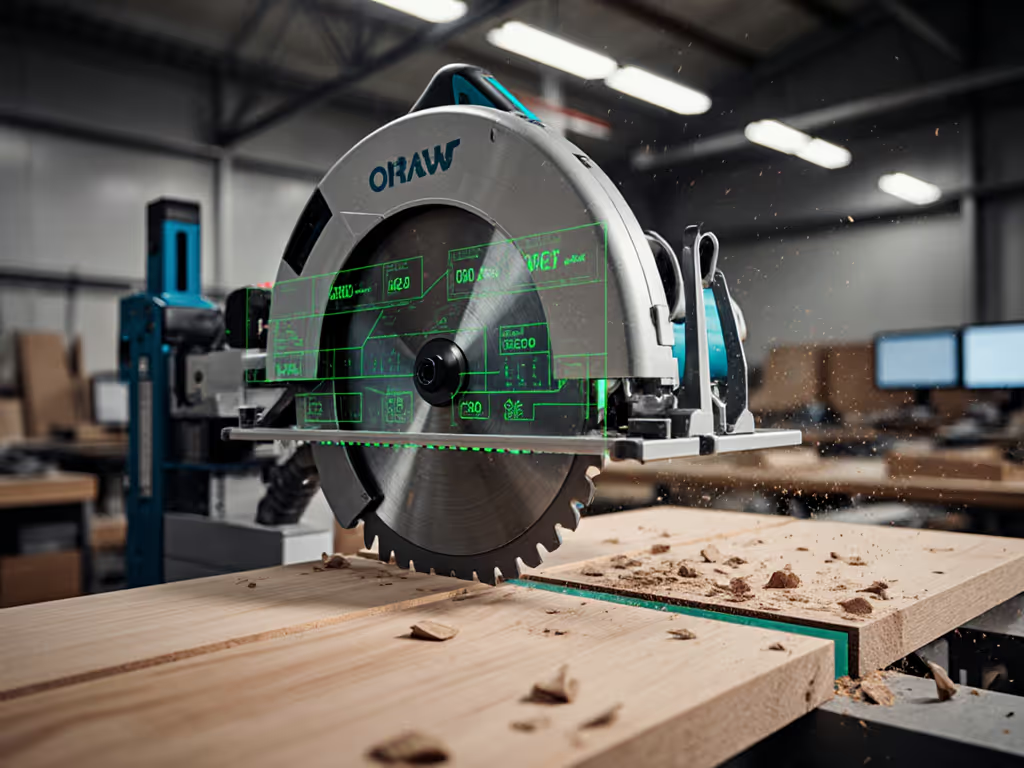
Circular Power Saw Evolution: From Pit Saw to Precision
By Luca Pereira • 11th Nov
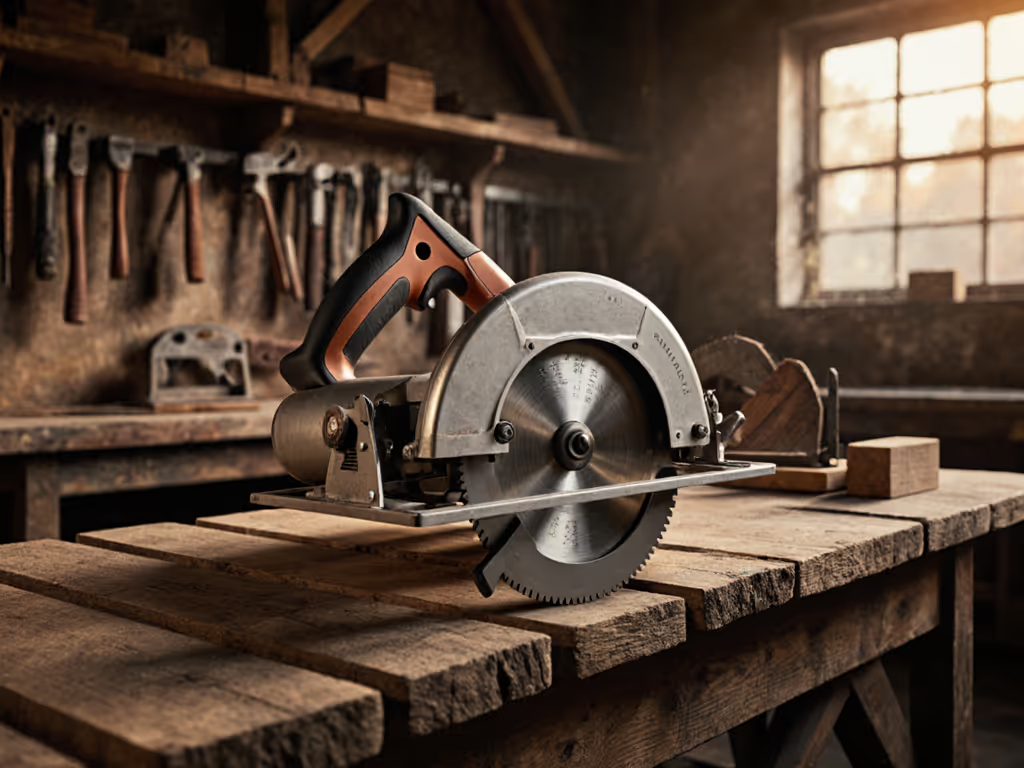
The story of the circular power saw is not just about spinning blades; it is a masterclass in power tool evolution where every innovation solved real-world waste. As someone who measures value in cost per accurate, clean cut (time and materials included), I have watched this progression transform from ponderous water-powered mechanisms to today's precision instruments. Price matters, but waste and rework cost more. That is why understanding how we got here helps you make smarter decisions today.
From Sweat Equity to Spinning Efficiency
Before 1810, cutting lumber resembled a punishing relay race. Two workers heaved a pit saw through logs, wasting half their energy on the return stroke. Historical records confirm Tabitha Babbitt's 1810 breakthrough in Massachusetts: by mounting a notched tin disk to her spinning wheel, she created continuous motion cutting that eliminated wasted effort. The Shakers quickly scaled this into water-powered mill operations. This was not just convenience; it represented a quantum leap in ROI when labor costs dominated production.
What many miss in the saw innovation timeline is how constraints drove progress. European manufacturers like Samuel Miller (1777 British patent #1152) and Gervinus of Germany (1780) developed similar concepts independently, but the American context (with abundant timber and scarce labor) accelerated adoption. Each leap in technological advancement addressed specific pain points: operator fatigue, material waste, and inconsistent cuts.
The Portability Revolution (and Its Hidden Costs)

The 1929 invention of the handheld circular saw by Art Emmons reshaped construction sites forever. No longer bound to stationary mills, carpenters could take the saw to the lumber. But this convenience came with compromise: early models sacrificed precision for portability. I have seen countless job sites where inexperienced users are pursuing square cuts with bargain saws, burning through expensive sheet goods while trying for that elusive first-try accuracy.
Remember my weekend built-in disaster? That is when I learned the hard way that the true cost is not written on the price tag. When a cheap blade burned through birch ply, I did not just lose a $40 sheet; I lost two hours of rework time and the confidence to call the job "done." That is why I model total cost of cut across three dimensions: tool acquisition, material waste, and time investment. The math rarely favors the cheapest option when plywood costs $80/sheet.
Modern Milestones: Precision Meets Practicality
Post-1950 advances targeted the pain points that still plague users today:
- 1950s-70s: Safety innovations like blade guards and riving knives addressed kickback anxiety
- 1980s-90s: Brushless motors improved power-to-weight ratios for reduced fatigue
- 2000s: Laser guides and LED worklights solved visibility issues for cleaner cuts
- 2010s-present: Brushless technology and FLEXVOLT platforms (like DEWALT's 60V MAX system) eliminated cord constraints while maintaining power
Each advancement directly addresses documented pain points: inconsistent cut quality, splintering on veneered materials, and battery anxiety. But here is what spec sheets will not tell you: optimal performance depends on your ecosystem. For choosing and planning a platform, see our guide to the circular saw battery ecosystem. Platform-locked professionals gain significant ROI by staying within their battery ecosystem, while DIYers with limited space often benefit more from versatile corded options that avoid battery storage hassles. Not sure which way to go? Start with our corded vs cordless comparison to balance power and portability.
The Real Cost of "Good Enough"
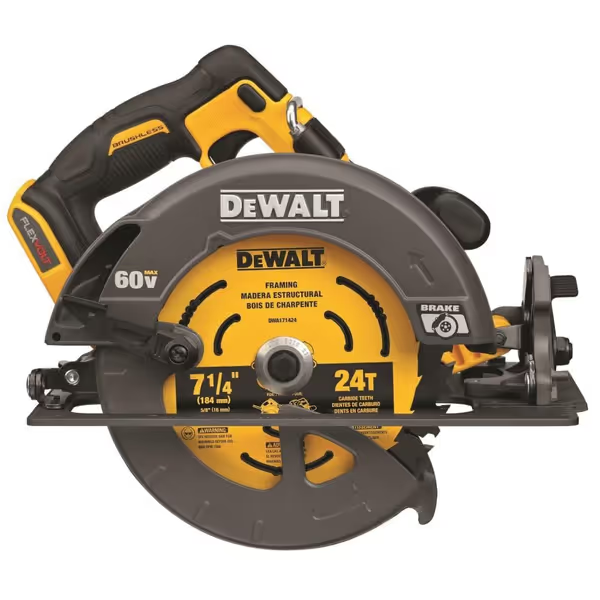
DEWALT FLEXVOLT 60V MAX* Circular Saw (DCS578B)
Cordless power rivals corded saws for clean, consistent, first-try cuts.
$174.99
Power OutputUp to 47% more power vs. DCS575
Power OutputUp to 47% more power vs. DCS575
Pros
Corded power, cordless freedom: cuts engineered lumber with ease.
Integrated LED and electric brake for safety and accuracy.
Durable build ensures long-term reliability and performance.
Cons
Mixed feedback on battery life and perceived value.
Customers find the circular saw performs like a corded saw, cutting through engineered lumber with ease and delivering serious power. The tool is strong and durable, lasting up to 3 years, and one customer notes it cuts through 3/4" plywood boards with ease.
Customers find the circular saw performs like a corded saw, cutting through engineered lumber with ease and delivering serious power. The tool is strong and durable, lasting up to 3 years, and one customer notes it cuts through 3/4" plywood boards with ease.
Let's run some scenario math on a typical 3/4" plywood cut:
- $120 bargain saw: 45 seconds/cut, 30% tear-out rate requiring sanding, 1 failed cut per 10 sheets
- $225 professional saw: 35 seconds/cut, 5% tear-out, 1 failed cut per 50 sheets
At $80/sheet for Baltic birch:
- Bargain saw adds $240 in wasted material per 10 sheets
- Professional saw adds $16 in wasted material per 10 sheets
The math becomes undeniable when you quantify total project cost: the "expensive" saw pays for itself by sheet 3. To cut cleaner and protect expensive sheet goods, use these tips to prevent circular saw tear-out. This is why I emphasize constraint-aware recommendations: the right tool minimizes anxiety, waste, and callbacks, even if the sticker price stings initially.
Price matters, but waste and rework cost more.
Making Smart Choices in Your Ecosystem
When evaluating circular saws today, focus on metrics that impact your bottom line:
- Cut consistency: Squareness within 0.5mm across materials (test with 3/4" melamine)
- Material preservation: Tear-out rates on veneered surfaces at standard feed rates
- System compatibility: Dust collection efficiency (% capture) with your existing vacuum
- Ecosystem integration: Battery runtime for your common tasks within your platform
The Skil 7-1/4" Worm Drive demonstrates how established designs solve real problems. It is heavier but delivers exceptional torque for dense lumber, reducing bogging that causes blade burn. Meanwhile, newer cordless models like the DEWALT FLEXVOLT 60V MAX offer impressive portability without sacrificing power, crucial for jobsite mobility where extension cords create tripping hazards and workflow interruptions.
Actionable Next Step: Your Cutting Audit
Next time you are about to make a cut:
- Track your waste: Note how many sheets get ruined by tear-out or misalignment
- Time your setup: Measure minutes spent aligning guides and clamping sheets For faster, repeatable accuracy, set up a simple guide: see our rip-cut guide and jig setup.
- Calculate your cost: Multiply wasted material by sheet cost + your hourly rate
You will likely discover that upgrading to a precision tool with better dust control and consistent performance pays back faster than expected. Remember, the real evolution in circular saws is not just about the tool; it is about your ability to reduce anxiety, waste, and callbacks. That is why I always say: buy once, cry never.
When you view power tool evolution through the lens of total cost of cut, you stop buying tools and start investing in precision. Every historical cutting tool advancement solved a specific pain point, and your job is to identify which solutions deliver the best ROI for your specific constraints. Whether you are working with vintage circular saws or the latest cordless models, the goal remains unchanged since Tabitha Babbitt's spinning wheel prototype: maximize clean cuts while minimizing wasted time, materials, and peace of mind.
Related Articles