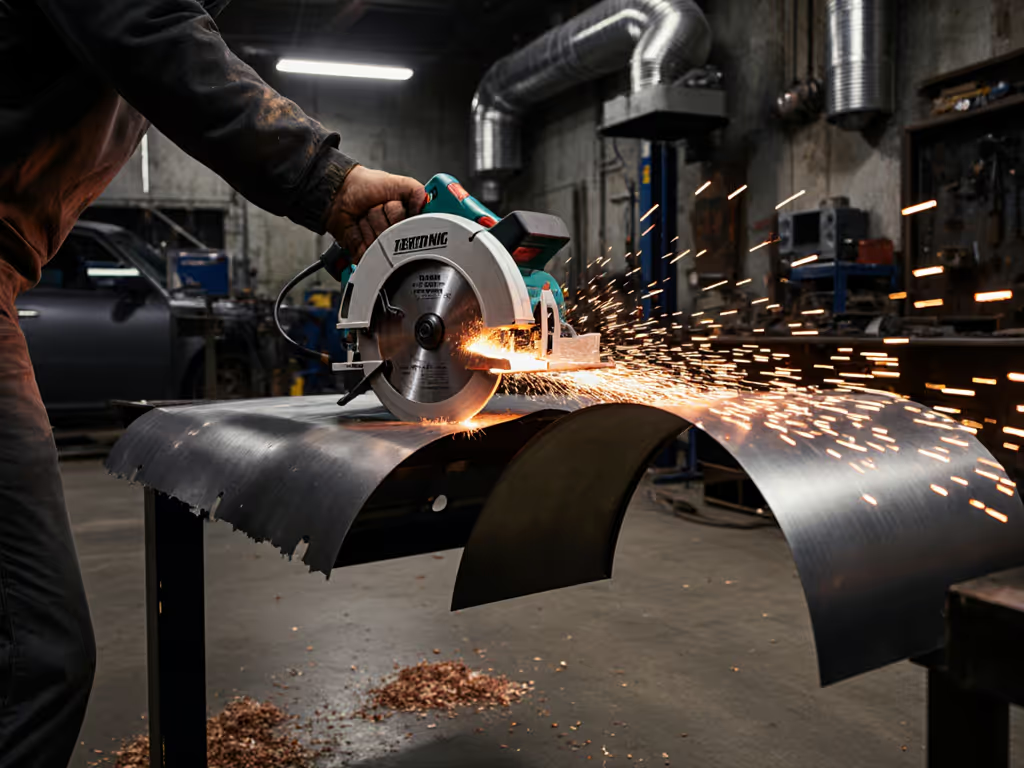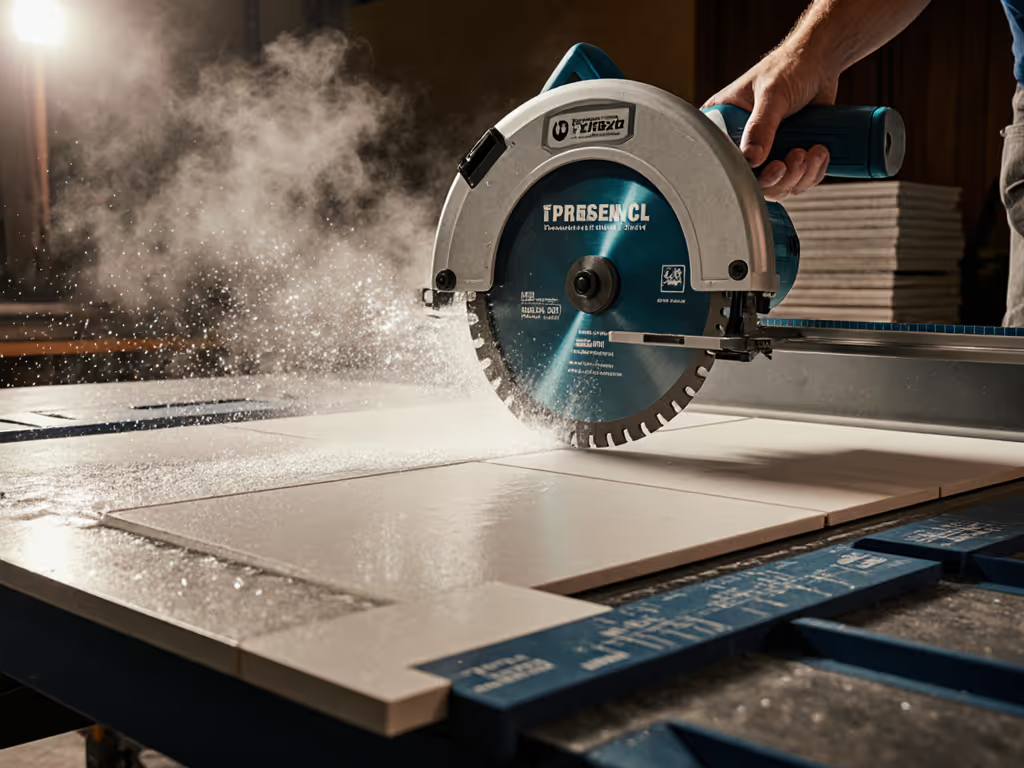

TPO vs EPDM Roofing: Circular Saw Performance
By Maya Tan • 28th Apr
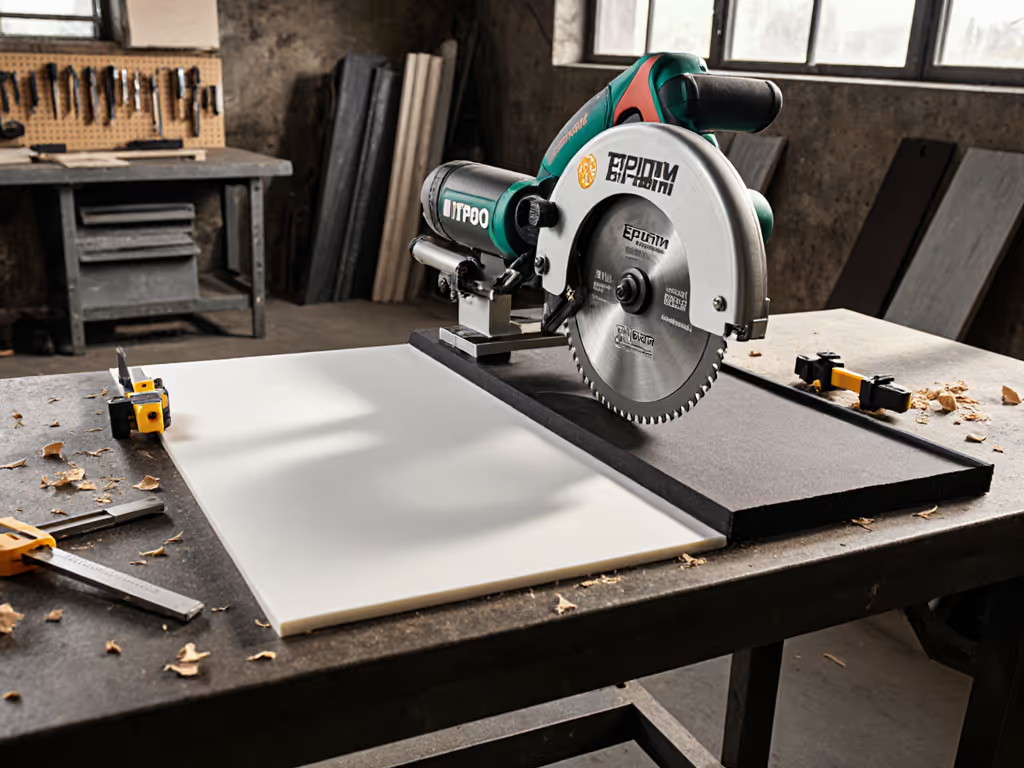
Why Material Science Matters More Than Tool Brand
I learned this the hard way. Years back, a cabinet install ran long because a 'pro' saw wandered two degrees over a 10-foot rip. I clamped a makeshift guide, timed repeats, and logged deviation by material type. The problem wasn't the saw; it was workholding and blade choice interacting with wood grain. That obsession with measured outcomes, not excuses, extended to roofing cuts when I helped spec systems for a commercial retrofit.
TPO and EPDM differ fundamentally in three ways that matter to circular saw performance: material stiffness, thermal sensitivity, and seam construction[1][2].
TPO's Thermoplastic Rigidity
TPO (thermoplastic polyolefin) is a rigid synthetic polymer, typically 45-60 mil thick [2]. It resists punctures and impacts better than EPDM because it has inherent structural strength [2][4]. This rigidity is a double-edged outcome:
Advantage in cutting: TPO's stiffness means less deflection under blade pressure. A properly supported membrane stays flat during the pass. Your kerf remains predictable. Deviation stays sub-degree if your baseplate is square and feed rate steady.
Challenge in cutting: Rigidity invites chattering. If your blade speed is too slow for the material thickness, the teeth engage inconsistently, creating micro-vibrations that compound over a long cut. This isn't wobble; it's feedback from blade load imbalance meeting material resistance. Log your RPM and feed rate per thickness; most users underestimate both.
EPDM's Elasticity and Flex
EPDM (ethylene propylene diene terpolymer) is a synthetic rubber, typically 45-60 mil as well, but with much higher tensile strength and elongation capacity [2]. EPDM is fundamentally more flexible than TPO. This flexibility shapes cut behavior:
Advantage in cutting: EPDM's flex absorbs vibration naturally. A blade pushing through EPDM experiences damping, as the material yields incrementally rather than resisting rigidly. This reduces chatter and can produce cleaner edges on the first pass if you avoid overfeeding.
Challenge in cutting: Because EPDM flexes, it moves laterally under blade side-load. A baseplate that tilts even 2-3 degrees causes the membrane to roll, creating a slanted cut face and ragged seam prep. Repeatability demands clamping parallel to the cut line and firm downward pressure. If long, straight membrane cuts are mission-critical, compare track guides vs straight-edge rip guides for better repeatability. Many operators under-clamp or rely on speed to compensate, and both worsen deviation.
Thermal Behavior Under Blade Load
Both materials exhibit thermal sensitivity, but in opposite directions. Understanding this prevents edge melt and binding.
TPO heat-welding during installation requires dry conditions and specific temperature ranges to cure properly[1]. Similarly, cutting TPO generates friction heat. High blade speeds (5,500-6,500 RPM for 7.25" saws) can soften TPO slightly at the kerf, causing the polymer to smear rather than cleave cleanly. Dark TPO membranes, though less common than white, absorb solar heat pre-cut, raising baseline material temperature [3].
Test outcome: Cut TPO at standard circular saw speeds (constant RPM) using a fine-tooth blade (80-100 teeth) to minimize friction per stroke. Measure edge temperature with an IR gun post-cut. Acceptable threshold: under 140 °F at the kerf. If you exceed 150 °F, throttle RPM or increase feed rate to clear chips faster.
EPDM contains carbon black for UV protection[4], which increases thermal mass. The material absorbs more ambient and friction heat. Black EPDM roofs stay 50-60 °F cooler than white TPO in direct sun [4], but during cutting, the carbon pigment conducts heat into the membrane, accelerating edge degradation if you dwell on the kerf. A smoking, melted edge indicates low feed rate or a dull blade.
Test outcome: EPDM responds better to moderate feed pressure and medium-tooth blades (60-80 teeth). Prioritize sharp blades; dull teeth increase heat per stroke. Measure cut time over 10 feet and compare edge appearance (smooth vs. torn) across three blade types. Log temperature and visual finish. Repeatable beats remarkable; if your edge looks clean and measures consistently, you've dialed the system.
Cut Quality and Deviation Across Material Types
Both TPO and EPDM are single-ply roofing membranes secured via heat-welding (TPO seams) or self-adhesive tape (EPDM seams) [6]. Seam integrity depends on edge prep, meaning how square and clean your saw cut is.
TPO Seams Demand Precision: TPO's heat-welded seams are permanent, waterproof connections stronger than the membrane itself [4]. If your cut is wavy or beveled, the heating tool can't melt the edge evenly. The result: cold spots, micro-leaks, and callbacks. Tolerance: ±1/8" deviation over 20 feet, square within 1 degree.
EPDM Seams Tolerate Slight Imperfection: EPDM seams use self-adhesive tape, which self-levels somewhat during application [6]. A slightly rounded or beveled edge can still bond cleanly if the tape overlaps correctly. This forgiving nature tempts users to cut loose. But puncture resistance and longevity depend on edge condition too, and rough cuts invite delamination over years.
Recommended Blade and Setup by Material
For TPO Cutting:
- Blade type: Fine-tooth (80-100 teeth), carbide-tipped, standard or thin-kerf
- Saw RPM: 5,500-6,000 (reduces friction smear)
- Feed rate: Steady, moderate push; let the blade cut without forcing
- Support: Clamp membrane to plywood substrate or a sacrificial backer board. Unsupported membrane sags, causing deviation and binding
- Workholding: Use at least two parallel clamps on the cut line to prevent lateral shift. Measure baseplate squareness before every job
- Dust control: TPO cuts produce fine plastic dust. Use a dust shroud and a sealed vac to contain particles; respiratory protection required indoors
For EPDM Cutting:
- Blade type: Medium-tooth (60-80 teeth), carbide-tipped, aggressive grind to bite through flex without dragging
- Saw RPM: 5,200-5,800 (slightly slower than TPO to reduce heat generation)
- Feed rate: Firm, consistent pressure. EPDM's elasticity invites hesitation; hesitation causes the blade to dull quickly and heat up
- Support: Clamp membrane to substrate parallel to the cut line. Side-load is the enemy; EPDM flexes around a tilted blade
- Workholding: Minimum three clamps per 10-foot run. Measure baseplate angle before each pass
- Dust control: EPDM cuts produce rubber particles and dust. Capture locally; particles are slightly oily and stick to filters faster than TPO dust. Clean vac filters more frequently
Environmental and Practical Factors
Both TPO and EPDM are recyclable materials [2], and cutting waste contributes to landfill burden. Minimize scrap through precise layout. Mark cut lines in pencil or chalk after measuring twice; cut once.
Temperature during installation affects how the membrane behaves under the blade. TPO heat-welding requires dry conditions [1]. Humid conditions mean the membrane carries surface moisture; wet surfaces cause blade binding and tear-out. Dry EPDM and TPO before cutting if they've been stored outside or in a damp truck.
On-site cutting of roofing membrane presents unique dust and noise concerns. Both materials generate airborne particles; OSHA silica standards apply if you're cutting mixed substrate (membrane plus insulation board beneath). Sealed dust collection and respiratory protection are non-negotiable if workers are nearby. For airflow targets and capture physics that actually work on rooftops, see our circular saw dust physics guide.
Outcome-Focused Testing Protocol
To decide whether TPO or EPDM is right for your next job, test both materials under identical conditions:
- Setup: Clamp a 24-36 inch sample of each membrane to a substrate. Use your standard circular saw, baseplate square, blade sharp.
- Measure: Record ambient temperature, material surface temperature, and baseline blade RPM.
- Cut: Make a 10-foot rip cut at your normal feed rate. Time the cut. Measure deviation from the layout line every 12 inches.
- Inspect: Photograph edge quality under raking light. Note any heat smear, tear-out, or chatter marks. Measure edge temperature post-cut.
- Log: Repeat twice more with the same saw and blade. Average your results.
Compare deviation, edge finish, and time across materials. The material that produces the tightest deviation, cleanest edge, and consistent time wins for your saw, your workspace, your technique. Outcomes over claims: show me square cuts and stopwatch times.
Further Exploration
If you're specifying roofing systems and cutting membrane is part of your workflow, gather your own metrics. Don't assume brand or material reputation predicts your results. Test both TPO and EPDM with your saw, your blade, and your support system. Log three cuts minimum per material. The data will reveal which system delivers repeatable, square results on your site, and that is the only verdict that matters. Outcomes over claims: repeatable beats remarkable.
Related Articles