Best Circular Saws for Structural Bamboo: Tested & Compared
By Maya Tan • 2nd Jun
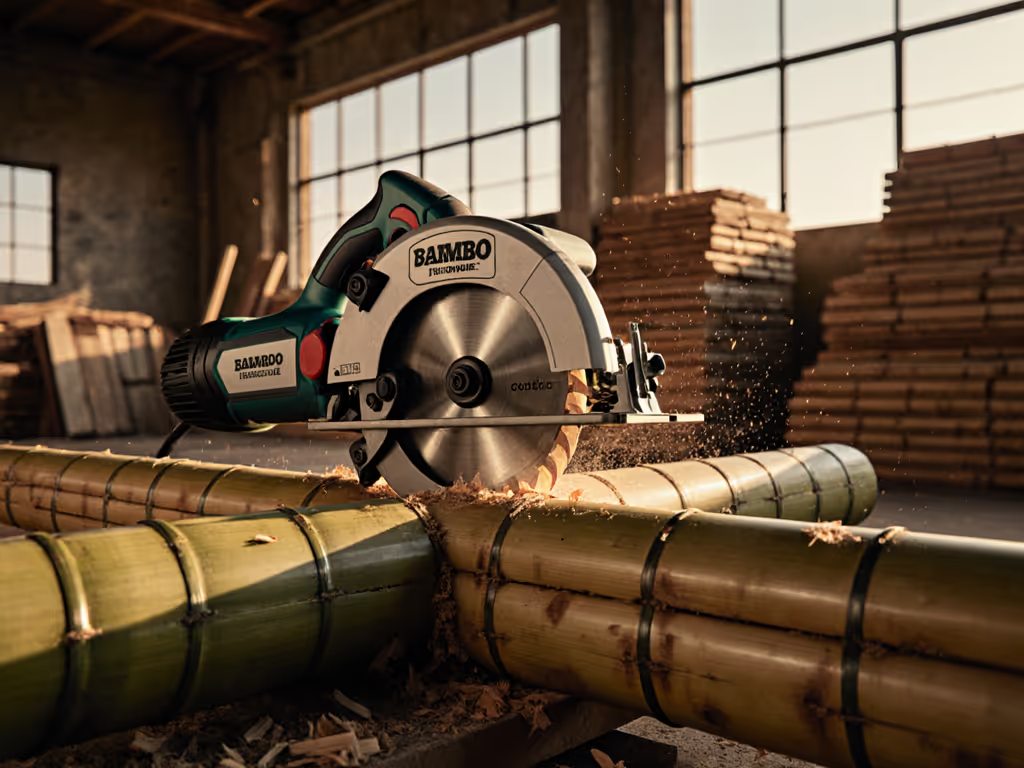
Choosing the best circular saw for structural bamboo is not about brand ego. It is about which setup gives you the most square, clean cuts, with the least variance, on the shortest clock. For large bamboo structural cutting saws and compact rigs alike, repeatable beats remarkable.
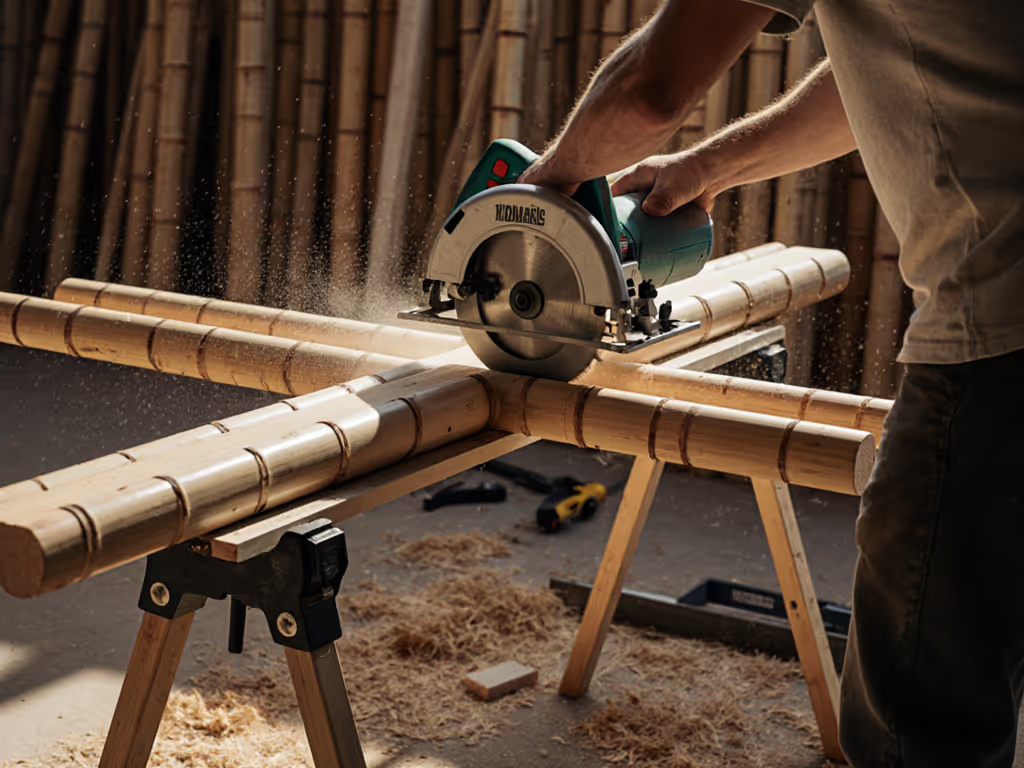
Outcomes over claims - show me square cuts and stopwatch times.
Below is a FAQ-style deep dive built for people who want numbers they can replicate, not marketing adjectives.
FAQ 1: Why is structural bamboo so punishing on circular saws?
Structural bamboo (poles, laminated panels, strand/engineered members) looks friendly. It behaves more like a dense, fibrous composite than softwood.
Key traits that matter for saw choice:
- High density and tough fibers Strand and engineered bamboo cutting often feels closer to dense hardwood than pine. Feed pressure goes up, motors run hotter, and marginal saws bog.
- Silica and abrasives in the outer skin Many bamboo species accumulate silica in the outer culm. That layer behaves like very fine sandpaper on your carbide tips, dulling thin, cheap blades fast.
- Hollow poles = vibration amplifier When you cut poles, you are cutting a drum. Poor workholding plus a light saw equals chatter, noise, and ugly tear-out.
- Long fibers = tear-out risk Those long fibers love to splinter at the exit side of the cut if you use coarse framing blades, push too fast, or let the bamboo flap.
Because of this, structural bamboo rewards:
- Higher-torque saws (especially for poles ≥100 mm OD or thick laminations)
- Stiffer bases and guards that resist flex
- Blades engineered for dense fiber vibration control and abrasion (TCG or high-quality ATB)
- Good dust capture, because fine bamboo dust hangs in the air and spreads fast
FAQ 2: What type of circular saw is best for structural bamboo?
You do not need an exotic specialty saw. You need a saw type matched to the size of your bamboo and how often you cut it.
Sidewinder vs worm drive vs "beam saws" for large bamboo
According to independent circular saw reviews, sidewinders (direct-drive saws with the motor alongside the blade) are usually lighter and more compact, making them easier for overhead or one-handed positioning.[10] Worm-drive and hypoid saws are heavier but deliver more torque and a longer, narrower footprint that many framers prefer for ripping straight lines.[10]
For structural bamboo, that difference matters. For a deeper comparison of motor layouts, see our worm drive vs sidewinder analysis.
| Saw type | Strengths for bamboo | Weak points | Best use cases |
|---|---|---|---|
| Sidewinder (7-1/4 in) | Light (often 3-4 kg), compact, good for overhead trimming and site mobility.[10] | Less torque on heavy, wet, or very dense members; more likely to bog in thick engineered bamboo. | Occasional bamboo, thin panels, small poles (<80-90 mm OD). |
| Worm drive / hypoid (7-1/4 in) | High torque, great tracking, long shoe helps stay on layout lines.[10] | Heavier; more fatigue if used one-handed or overhead. | Frequent pole work, 90-120 mm poles, thick laminated/engineered bamboo members. |
| "Beam saw" (10-16 in) | Single-pass cuts on very large bamboo beams, stacks, or built-up members. | Very heavy, overkill for typical poles and panels, high cost. | Rare specialty work, cutting bundled members or oversize engineered sections. |
For large bamboo structural cutting saws (big poles, glulam-like bamboo members, multi-ply panels), I treat worm drives as the practical top end for most users. Beam saws only make sense if you're routinely cutting members >75 mm thick where a single pass saves real time.
If your bamboo work is mostly 30-50 mm engineered flooring or panels, a good sidewinder with the right blade and guide is plenty.
FAQ 3: How much power do I really need for structural bamboo?
Most corded framing saws sit around 15 A at 120 V in North America, which is the benchmark for "full-size" power.[10] Many modern cordless saws with high-capacity packs and efficient brushless motors can now rival this performance.[10]
For bamboo, I translate that into practical thresholds:
-
Light duty / occasional cuts
-
Cordless: 18-20 V platform, brushless motor, at least ~1,200-1,300 W equivalent (manufacturer spec).
-
Good for: trimming 20-30 mm engineered bamboo, crosscutting small poles (<80 mm OD).
-
Primary bamboo saw on site
-
Corded: 15 A sidewinder or worm drive.
-
Cordless: 36-60 V (or dual-battery) framing saw class.
-
Good for: repetitive cuts in 40-60 mm structural members and 90-120 mm poles (two passes).
-
Overkill / niche
-
Beam saws or specialized large-diameter saws.
-
Only worth it if you're processing large custom bamboo members daily.
A simple field test: if your saw cannot maintain a steady feed through a 40 mm engineered bamboo offcut without slowing noticeably, you are underpowered for structural work.
FAQ 4: What blades work best for engineered bamboo and poles?
Blade choice matters more than saw "brand" for bamboo.
Tooth count and grind
For engineered bamboo cutting (panels, flooring, laminated beams):
-
40-60T, carbide-tipped, ATB or ATB+R
-
ATB (Alternate Top Bevel) gives clean crosscuts in dense fibers.
-
40T is a good all-rounder for site work; 60T if you prioritize edge quality.
-
TCG (Triple Chip Grind)
-
Excellent for abrasive materials and composites.
-
Slightly less "polished" cut than a fine ATB, but holds up better against silica in bamboo's outer layer.
For bamboo pole cutting techniques where you're crosscutting culms:
- 24T framing blade works, but splinters more.
- 30-40T carbide blade with a robust plate gives a calmer cut and less tear-out.
Hook angle and kerf
-
Moderate or low hook angle (0° to +10°) Helps control feed rate in dense material. Aggressive +20° hooks can feel grabby on round poles.
-
Thin-kerf vs full-kerf Thin-kerf (≈1.5-1.8 mm) reduces load on smaller cordless saws but deflects more if your setup is sloppy. For precision structural cuts, I prefer:
-
Thin-kerf on smaller, lighter sidewinders.
-
Full-kerf on high-torque worm drives where stiffness matters more than a tiny efficiency gain.
Practical pairing examples
- 7-1/4 in worm drive + 40T TCG or high-quality 40T ATB: workhorse combo for structural bamboo members and cleaner pole cuts.
- 7-1/4 in cordless sidewinder + 40T thin-kerf ATB: balanced combo for engineered bamboo panels and light pole work.
If your current blade burns bamboo or leaves heavy fuzz on the exit side, start by upgrading the blade before blaming the saw.
FAQ 5: How do I control vibration, blowout, and wandering cuts in bamboo?
Bamboo punishes casual setups. Controlling dense fiber vibration is the difference between "that'll do" and finish-ready edges.
Workholding for panels and laminations
For panels:
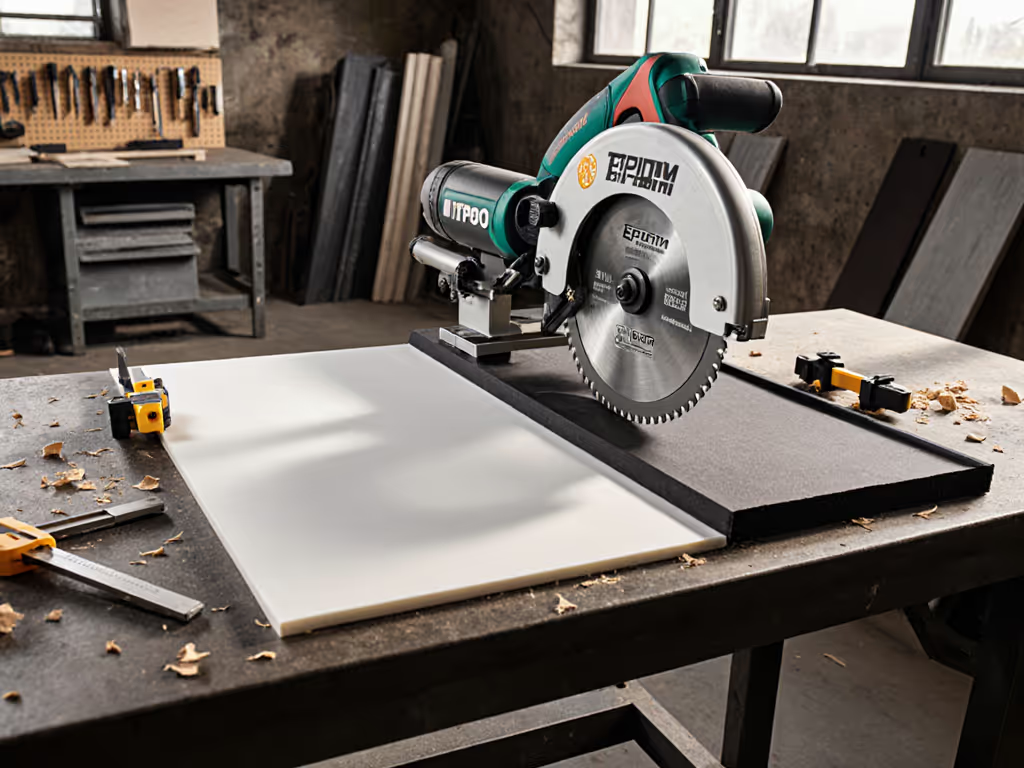
- Support the sheet on rigid foam or a torsion box so offcuts don't drop.
- Clamp a straightedge guide (factory edge, aluminum guide, or track) on the waste side.
- Use a shallow first pass: set depth to ~5-8 mm, score the face, then reset for full depth. This two-pass method reduces exit tear-out dramatically.
Workholding for poles
For poles, never balance on a couple of sawhorses and hope:
- Build a simple V-cradle from 2x scraps or plywood to keep the pole from rolling.
- Strap or clamp the pole to the cradle.
- Keep the cut zone close to a support so the pole doesn't bounce as you cut.
Controlling wandering cuts
Wandering cuts usually come from three things: flexible bases, poor line of sight, or forcing the feed. Set up for straight results with our repeatable rip cuts guide.
Method I use when a cut must be accurate over distance:
- Clamp a guide.
- Run three timed cuts in the same setup through scrap bamboo.
- Measure deviation from the line at 300 mm and 600 mm (mm scale, not "eyeball") on each cut.
- If variance is >0.5-0.7 mm between cuts, your system (saw + guide + technique) is unstable - fix that before touching real material.
I learned this the hard way when a long rip wandered a couple of degrees over 3 m and cost me a half-day of corrections. Since then, every new saw and guide earns its keep with measured runs.
Repeatable beats remarkable.
FAQ 6: What about dust, noise, and site cleanliness with bamboo?
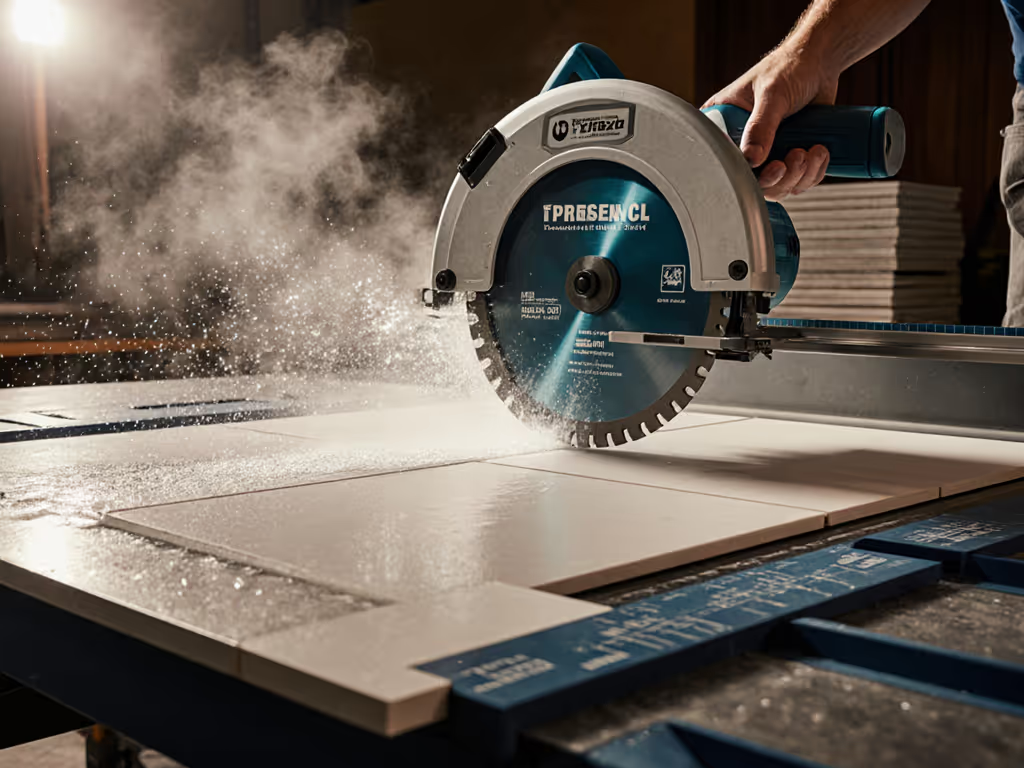
Bamboo construction dust management is non-negotiable if you work indoors, around clients, or near neighbors. Understand airflow and capture with our circular saw dust physics explainer.
Dust behavior
Bamboo dust is:
- Fine and light - it hangs in the air longer than coarse softwood chips.
- Generated in volume - engineered bamboo cutting on a circular saw produces continuous fine chips and dust.
Practical dust control steps
- Use a saw with a rear or side dust port that accepts a standard vac adapter. Many modern circular saws include this feature or offer an accessory port.[10]
- Connect to a shop vac with a fine or HEPA filter.
- Keep hose runs short and avoid sharp kinks to maintain airflow.
- If cutting indoors, combine:
- Plastic sheeting to isolate the zone.
- A fan exhausting to the outside, if allowed.
- PPE: at minimum, a properly fitted dust mask or respirator.
Noise considerations
Worm-drive and beam saws are louder than small sidewinders.[10] For occupied spaces:
- Prefer lighter, quieter sidewinders plus sharp blades.
- Use scoring passes to reduce the need for aggressive feeds that spike noise.
FAQ 7: Corded vs cordless for structural bamboo work?
According to tool tests, modern cordless saws with large packs and brushless motors now rival many 15-amp corded saws in cutting speed and power.[10] That matters if you're platform-locked. For a data-backed breakdown, see our corded vs cordless comparison.
When to go cordless
- You already own a strong battery platform.
- Most cuts are 20-40 mm engineered bamboo, occasional poles.
- You often work in driveways, rooftops, or remote spots where cords are a hassle.
Pick:
- A high-output brushless saw on your platform.
- At least 2-3 high-capacity packs if you expect continuous cutting.
When to stay corded
- You cut large poles or members most days.
- You need consistent power without runtime anxiety.
- You often rip thicker or denser material on site.
A 15 A worm drive or sidewinder is still the simple, predictable choice for heavy structural bamboo.
Many crews land on a hybrid: corded worm drive as the main bamboo saw, cordless sidewinder for trim, access, and quick one-off cuts.
FAQ 8: What does a "bamboo cut kit" look like?
To remove decision fatigue, think in systems: saw + blade + guide + support + dust.
Example kit: Structural bamboo framing & poles
- Worm-drive or high-torque sidewinder (corded or high-voltage cordless).
- 40T carbide blade, ATB or TCG, full-kerf.
- 2x V-cradles or a multi-position cradle jig.
- 1-2 clamp-on straightedges ~2.4 m long.
- Shop vac with HEPA filter + compatible dust port adapter.
- Marking tools: fine-tip marker/knife + square sized to your poles.
Example kit: Engineered bamboo panels & interior work
- Lighter sidewinder (corded or cordless).
- 40-60T thin-kerf ATB blade dedicated to clean panel cuts.
- Foam sheet for full support of panels on the floor.
- Guide rail or straightedge with two clamps.
- Dust extraction plus plastic sheeting for isolation.
Example kit: Mobile / small-space setup
- Compact cordless circular saw with dust port.
- One general-purpose 40T blade + one cleaner 60T blade stored in a simple blade sleeve.
- Foldable supports or knockdown torsion box.
- Short straightedge (1.2-1.5 m) plus a couple of F-style clamps.
- Small shop vac on a cart.
Build one kit now. For measured techniques specific to poles and joinery, see our structural bamboo cutting guide. Add specialty blades or guides only when you can justify them in saved time or reduced rework.
FAQ 9: Safety and workholding specifics for bamboo poles
Bamboo poles invite risky shortcuts because they "look light." I won't recommend unguarded or freehand cuts.
Key safety rules for poles:
- No freehanding in the air - always support in a cradle or between rigid stops.
- Prevent rolling - wedges, notched blocks, or V-cradles are mandatory.
- Mind the offcut - as you finish a cut, support the offcut so it doesn't drop and pinch the blade.
- Depth setting - set blade depth so teeth clear the inside wall of the pole with ~5-8 mm extra, not excessive tooth exposure.
- Start straight - bring the blade to full speed, then ease into the cut. Avoid "stabbing" starts that can catch fibers.
For repeated crosscuts at the same length, build a stop block on your cradle. That boosts both safety and consistency.
FAQ 10: How can I benchmark my own saw for structural bamboo?
You do not need a lab, only a repeatable method.
Simple benchmarking protocol
Pick the bamboo type you care about most (e.g., 40 mm engineered plank, 90 mm pole) and run this:
- Prepare samples
- 5-10 pieces of the same dimension and moisture condition.
- Set up a stable station
- Same supports, same guide, same depth setting for all cuts.
- Measure cut time
- Time each cut from blade entry to exit.
- Record in seconds.
- Compute average and note the spread (fastest vs slowest).
- Check squareness
- Use a reliable square and a 0.5 mm precision ruler.
- Measure deviation at 50 mm and 100 mm from the cut edge on multiple pieces.
- Rate tear-out (1-5 scale)
- 1 = heavy splintering, 5 = clean, glue-ready.
- Note both entry and exit faces.
- Subjective vibration score
- 1 = calm, 5 = chattering.
- Note where vibration appears (start, mid-cut, exit).
Repeat after:
- Swapping blades
- Changing feed technique (two-pass scoring vs single pass)
- Changing saw types (corded vs cordless, sidewinder vs worm drive)
When you see that one setup consistently delivers, say, <0.5 mm deviation, 30-40% faster cut times, and higher tear-out scores, you've identified your best circular saw for structural bamboo in your own environment.
Where to go next: quick experiments that pay off
If you want better results without buying a new saw tomorrow, the highest-ROI next steps are:
- Dedicate one high-quality 40-60T blade to bamboo only and log its performance over time.
- Build a simple V-cradle and measure how much it reduces vibration and tear-out in pole cuts.
- Time and measure three different cut setups (with vs without guide, single vs double pass) on the same bamboo and keep the notes with your saw.
Outcomes over claims - show me square cuts and stopwatch times. Once you start measuring your own system, the "best" circular saw for structural bamboo on paper becomes less important than the one that wins those tests on your jobsite.
Related Articles