
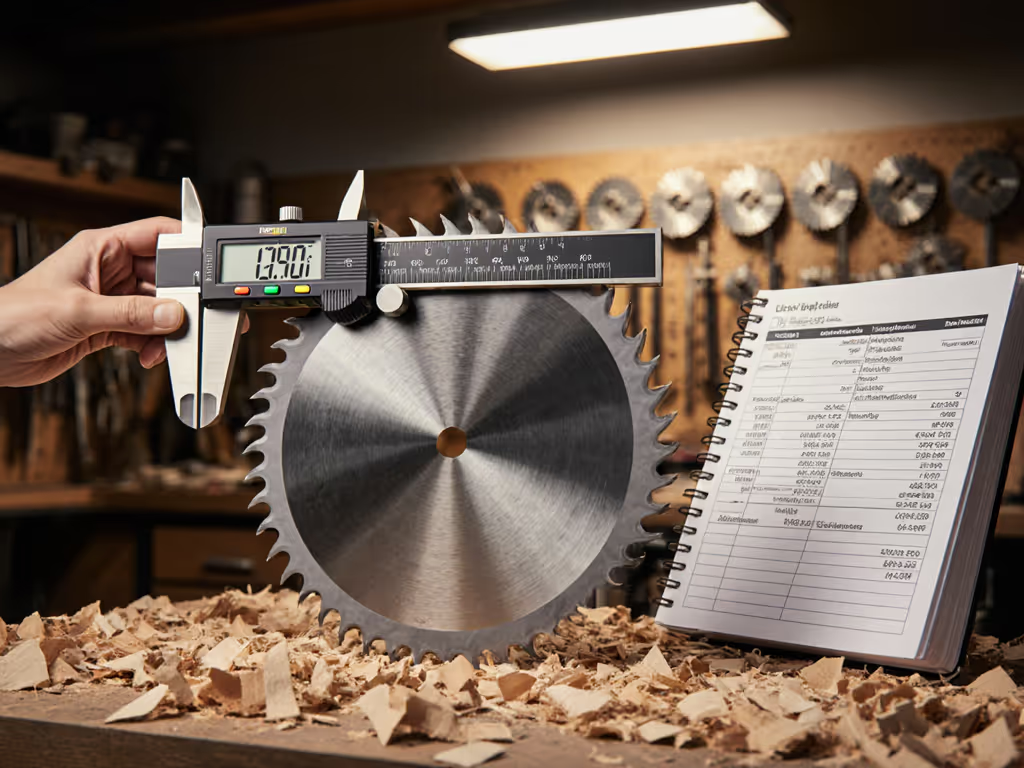
Circular Saw Curved Cut Jigs: Proven Accessories
By Ravi Kulkarni • 15th Feb
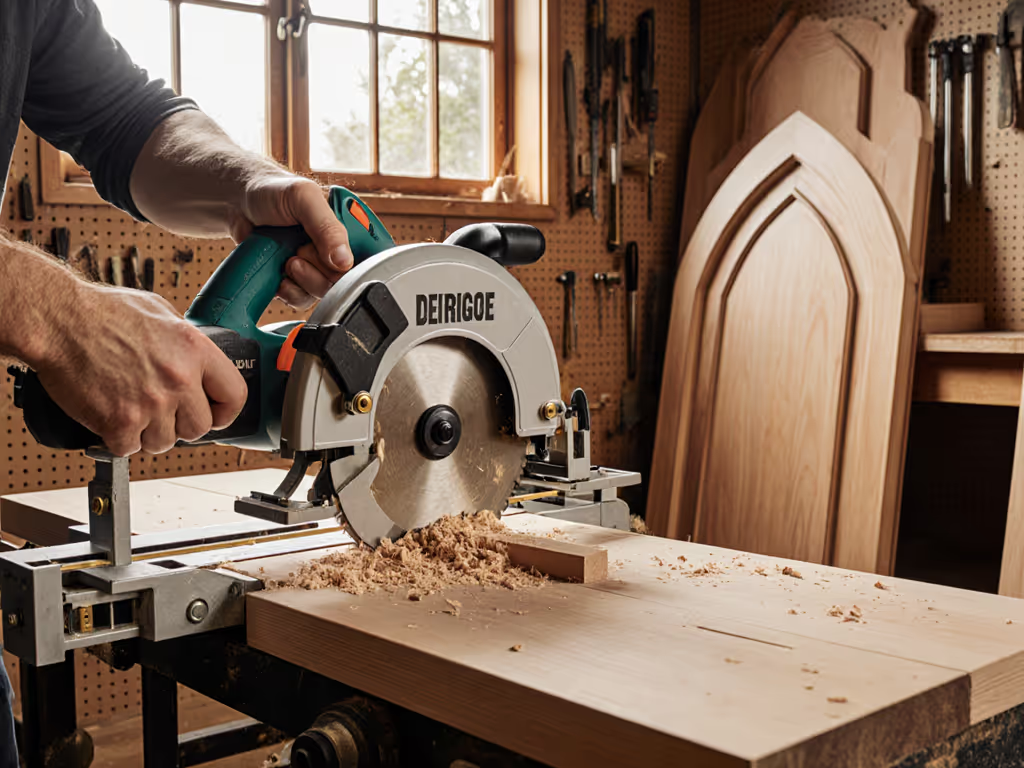
A circular power saw paired with the right jig transforms scattered, wandering cuts into repeatable curves that hold layout tolerances and deliver glue-ready edges. When throughput beats peak, when consistency across crews matters more than a single saw's brochure spec, curved cut accessories become force multipliers. They eliminate setup guesswork, reduce material waste from blown layouts, and prevent the callback that swallows profit margin in a single punch-list mistake.
Jobsite realities beat brochure promises every single time. Curved cut accessories aren't exotic. They are systems that work (proven across commercial trim work, deck framing, architectural millwork, and maintenance callouts). Here's what separates accessories that stick around the truck box from those collecting dust. For step-by-step setups and DIY options, see our repeatable rip-cut jigs guide.
Why Curved Cut Jigs Matter on the Job
Circular saws excel at straight cuts when guided. Left loose, they wander. On curves (door arches, radius returns, soffits, custom shelving) a freehand setup invites error margins that compound across a crew. One operator's "close enough" becomes another's scrap.
A jig absorbs operator variability. It centers the blade, controls feed rate, and lets scribing or reference lines do the aligning. To lock in accuracy across materials, set blade depth and bevel correctly before clamping the jig. The result: repeated arcs that match layout within 1/16 inch, material that goes together without shimming, and time reclaimed from rework.
On a mid-size condo build I coordinated, framers cut eight stair treads freehand against a bevel template. No jig, just skill and hope. Three treads had creep, the curve drifted from layout by nearly 3/16 inch. Rework meant cutting new blanks, explaining the callback to the general, and erasing a day's margin. I rebuilt the cut station, standardized blade selection by material, and locked in a simple plywood guide fence indexed to the tread blank's edge. If you're unsure which blade fits your stock, use our blade selection guide. Next phase: zero rework on 64 treads. That's throughput.
Core Jig Types for Circular Saw Curves
Radius Guide Jigs
Radius guides are the most common curved-cut accessory. They are trammel-style arms that pivot around a fixed point while the circular saw's baseplate rides along a tangent fence. Adjustment is simple: move the pivot point closer or farther from the fence to dial in the radius.
Strengths: Easy to set up once you understand the geometry. Suitable for convex curves (door crowns, arches, counter edges). Cost is low, about $30-80 for a decent aluminum unit, or DIY it from hardboard and a bolt.
Weaknesses: Requires a solid, flat reference surface for the fence. Feed rate is manual, so consistency depends on operator focus. Large radii become unwieldy (the arm gets long, workspace fills fast, and precision degrades if the pivot shifts).
Best for: Shop applications and custom millwork where the blank is stationary and the saw travels. Production runs under 20 pieces per shift.
Straight-Edge Track Jigs
These are the workhorse of commercial jobsites. Deciding between a track saw and circular-saw straight edges? Compare track rails vs DIY/commercial guides. A rigid aluminum or MDF rail clamps to your workpiece; the saw's baseplate rides against a guide block that travels along the rail. Result: a blade track that is absolutely parallel to the rail.
Strengths: Cuts are dead straight, kerf consistent, and repeatable across batches. No measuring or re-setup between cuts if the rail is locked. Dust capture works well because the vacuum port sits under the guard, away from the saw's sidewash. Battery use is predictable, the guide eliminates binding and bogging, so runtime stays strong across a shift. Guides also help prevent kickback by keeping the cut aligned and reducing pinch points.
Search data from recent circular saw trials confirms this: saws equipped with track guides and Freud blades produced 38-53 cuts per charge on plywood and 2×12 lumber depending on blade and battery size.[1] Without guidance, the same saws averaged 24-36 cuts because operators overcorrected for drift and applied inconsistent feed pressure.
Weaknesses: Jigs add weight and take bench space. Setup time is not zero, you clamp the rail, verify alignment, and make a test cut. Rail wear (scratching, dings) eventually degrades accuracy if not maintained. Some jobs do not suit a straight track (furniture with organic edge curves, radius returns).
Best for: Commercial trim work, deck framing, door and window opening sizing, and ripping sheet goods. High-volume production where 20+ identical cuts are normal.
Circle Cutters and Pivot Mounts
A pivot mount (bolt hole in the baseplate) lets you convert a circular saw into a poor man's hole saw for cutting large circles or rings from sheet stock. The saw remains stationary; the workpiece rotates around the blade.
Strengths: Precise circles from 6 to 48 inches.
Related Articles

Must-Have Circular Saw Add-Ons for Repeatable Precision Cuts
Learn how track guides, quick-set rip systems, negative-hook blades, and dust extraction make circular-saw cuts consistent and glue-ready. Includes setup guidance and real-world performance benchmarks to improve accuracy, speed, and control.

Stop Guessing Setup: Track Saw vs Circular Saw Rip Guides
Learn how setup - not the tool - drives accuracy, with testing that shows a circular saw plus a quality rip guide can approach track-saw precision. Get actionable steps to align guides, reduce strain, and improve dust capture so sheet-goods cuts are consistent and clean.