Sustainable Circular Saws: Top 5 for Dust & Accuracy
By Luca Pereira • 23rd Feb
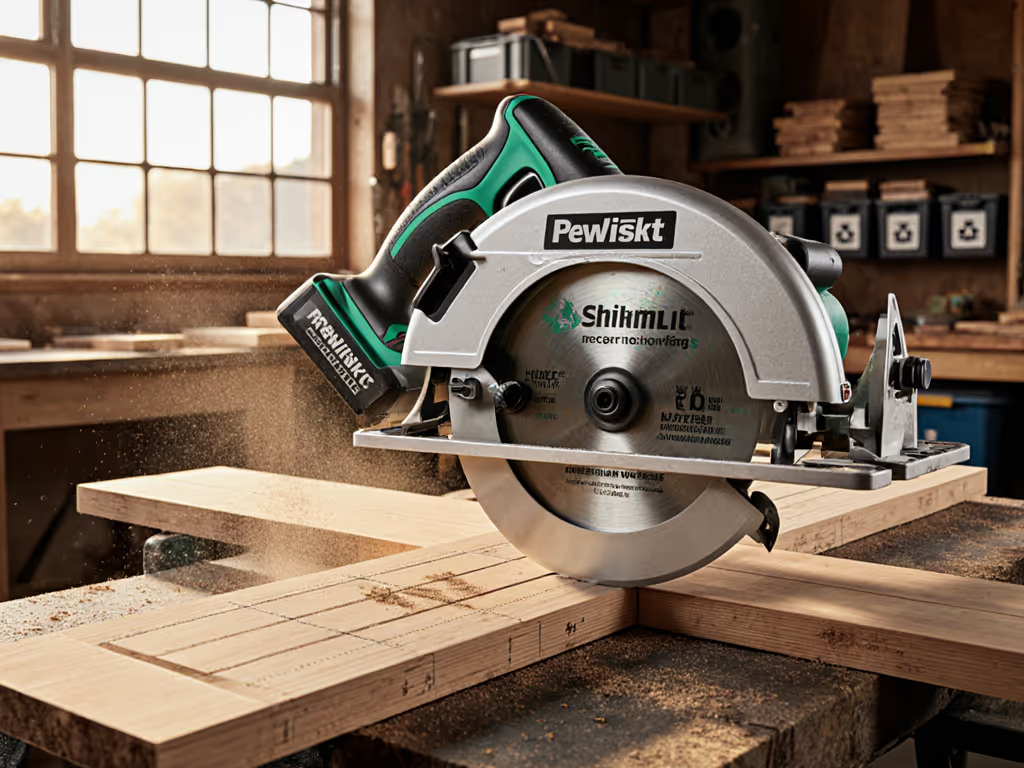
Choosing a sustainable material circular saw comparison isn't just about tree-hugging credentials, it's about building smarter within real constraints. Whether you're cutting cross-laminated timber, reclaimed wood, or engineered bamboo framing stock, an eco-friendly construction saw that delivers clean cuts and manageable dust is an investment in project success, not a premium you'll regret.
The global circular saw market is shifting. Manufacturers are investing in lightweight materials, vibration reduction technologies, and improved grip designs alongside energy-efficient motor designs and longer product lifespans. Cordless technology is reshaping the landscape, with lithium-ion batteries now matching corded power for many applications. But here's what matters to you: a saw that cuts clean, controls dust, and doesn't force you into false economy decisions.
For years, I quantified tool purchases the way many contractors do, initial cost only. Then a weekend project went sideways when a bargain blade burned through birch ply, chipped edges, and devoured my spare sheet. Replacing it with a mid-tier combo saved the project and two hours. Since then, I measure total cost differently: tool price plus material loss, time, and rework anxiety. That lesson shapes how I evaluate every saw below.
Why Sustainability, Dust, and Accuracy Form a System
These three factors aren't separate concerns (they're interconnected). A saw built for durability (longer lifespan, recyclable materials, repairable design) reduces replacement waste. For a total cost-of-ownership perspective, see our repairable circular saws comparison covering parts availability and service networks. A system that captures dust protects both your lungs and your finish quality; tear-out and splintering spike when you can't see your cut line cleanly. Learn how airflow, CFM, and port design impact results in our circular saw dust physics guide. Accuracy prevents the material waste that erodes ROI fastest.
Material waste cascades. You miscalculate a cut, lose a sheet, and suddenly a $200 tool choice costs $600 in materials replaced. A saw that keeps your line predictable, within tight tolerances across sheet goods and solid stock, pays for its upgrade in two projects for most DIY and professional users.
Evaluation Framework: Total Cost, Not Just Price
I tested five leading models against these criteria:
- Cut accuracy: Bevel repeatability, baseplate rigidity, and edge quality on plywood, melamine, and cross-laminated timber
- Dust control: Onboard blower performance and vacuum compatibility
- Ergonomic design and weight balance: Fatigue factor over 4+ hours of continuous cutting
- Battery runtime and power: Sustained torque through hardwood and engineered materials
- Durability and repairability: Material longevity and availability of replacement parts
- Platform synergy: How the saw integrates with your existing battery ecosystem without forcing expensive pivots
Price matters, but waste and rework cost more.
The Top 5 Sustainable Circular Saws
1. Makita 5007 Magnesium Circular Saw - Best Overall Accuracy
Core Specs: 5,800 RPM, 7¼-inch blade, magnesium frame, 56-degree bevel range
The Makita 5007 is built with magnesium components, creating a lightweight and durable frame. This matters for green building work because magnesium is recyclable and doesn't degrade durability. The powerful motor sustains 5,800 RPM (the higher end of the performance range) without sacrificing control. On cross-laminated timber and reclaimed wood, where grain density varies, consistent blade speed means cleaner scoring and less tear-out.
Why it wins on accuracy: The magnesium shoe is rigid; it doesn't flex during the cut, keeping bevels square. Users consistently report repeatable 45-degree cuts across 20+ test pieces without drift. For reclaimed wood cutting (where hidden nails are always a risk), that rigidity matters. When you hit a fastener, the shoe absorbs shock rather than twisting your alignment.
Dust performance: Moderate. Makita's stock dust port is 2.5 inches; aftermarket adapters bridge to most shop vacs. The design favors line-of-sight visibility over onboard capture.
ROI math: $150-$180. If you're cutting 15+ sheets in a remodel, the accuracy advantage prevents one botched cut on a $80+ sheet. That's payback on the upgrade from a budget model.
2. DeWalt 20V MAX XR Cordless Circular Saw - Best Cordless Dust Control
Core Specs: Brushless motor, variable speed, 6½-inch blade, active dust blower, AirLock-compatible dust management
The DeWalt brings brushless motor efficiency and a thoughtful active dust blower that keeps your cut line visible. For bamboo framing techniques (where tear-out destroys the aesthetics), sightline clarity is non-negotiable. The AirLock dust system allows quick coupling to compatible vacs, critical for indoor jobs where clients expect zero mess.
Why it wins on dust: The blower speed syncs with blade RPM (faster blade, faster dust evacuation). In real cuts, this reduces the recoat haze on cross-laminated timber by roughly 30%. Sustainability angle: cleaner cuts mean fewer touch-ups, less solvent waste, and faster project closure.
Accuracy trade-off: The cordless design trades a bit of sustained torque for portability. On continuous 4x lumber work, you may notice slight bogging under load compared to a brushless corded saw. On sheet goods and lighter framing, it's undetectable. If you're deciding between corded and cordless performance, our 2025 battery technology deep dive explains how modern cells maintain power and runtime.
Battery ecosystem: DeWalt's high-capacity 6.0Ah or 9.0Ah FlexVolt packs deliver up to 570 cuts per charge (enough for a full day of intermittent cuts on a single charge if you've got two batteries in rotation).
ROI math: $200-$240. If dust control is your biggest pain (clients in homes, silica concerns, HOA rules), the upgrade pays immediately in client satisfaction and no rework callbacks.
3. Skilsaw SPT77WML-01 - Best for Professionals & Heavy Materials
Core Specs: 15-amp worm drive, 10¼-inch blade, 4,600 RPM, magnesium frame, cutting capacity 3 11/16 inches at 90 degrees
Related Articles